Spring 2026 Property Correction: Why Luxury Homes Fall Fastest

Updated:
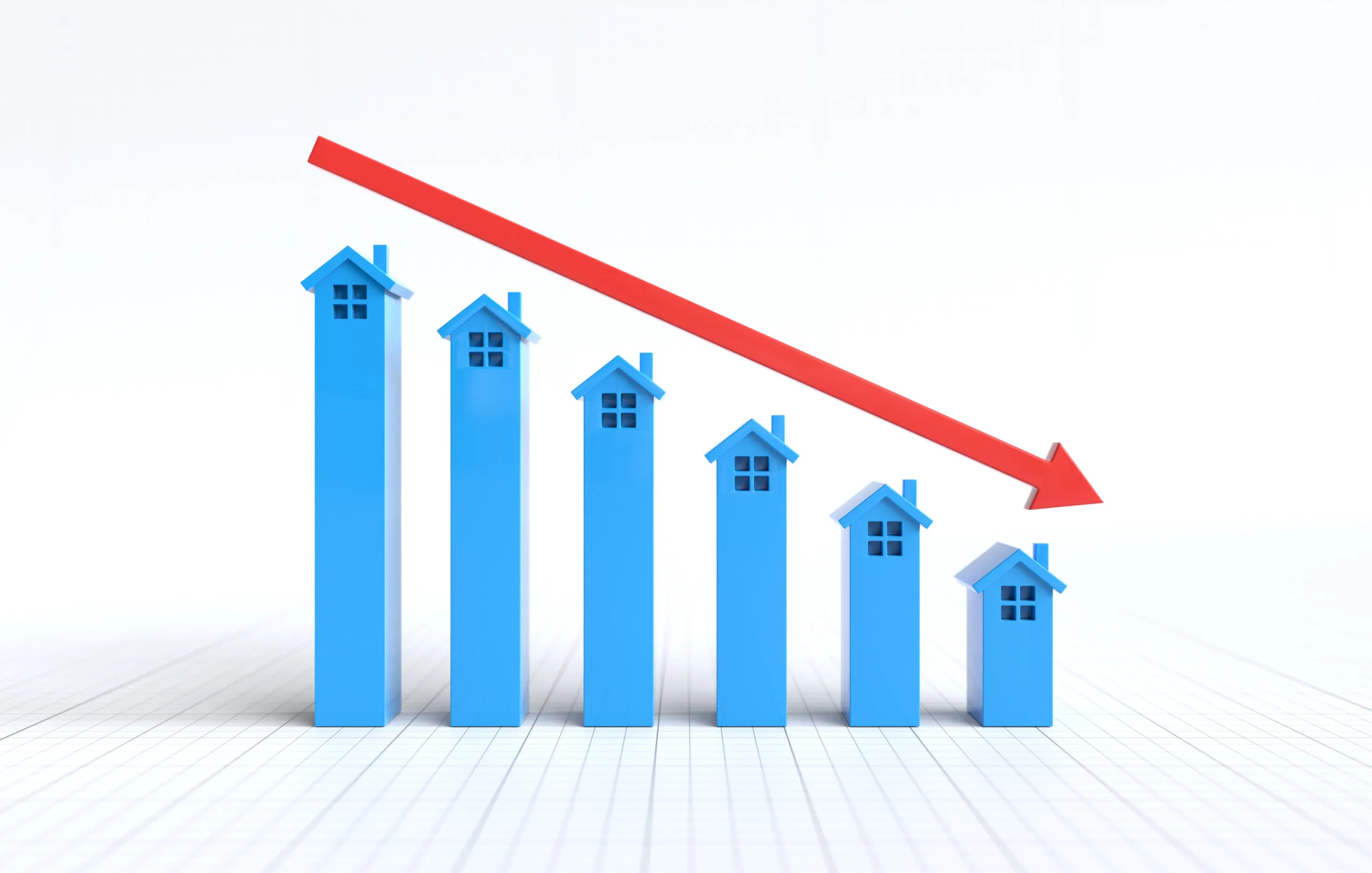
Australian dwelling values have now fallen for five months running. Cotality's Home Value Index recorded a national drop of 0.9% in August 2026, a fifth straight monthly fall, leaving the index 3.6% below the peak it reached in March 2026. The pattern has held since the downturn began: upper quartile and luxury housing keeps falling fastest, with the top end of both Sydney and Melbourne now down more than 10% from its own peak (10.7% and 10.5% respectively). For anyone weighing up whether to buy, hold or sell an investment property right now, that gap between the top and the middle of the market matters as much as the headline figure does.
Five straight months of falling values
The Australian Bureau of Statistics tells a similar story from a different angle: its Total Value of Dwellings release for the June 2026 quarter recorded the estimated value of all Australian housing falling $34.1 billion over the quarter to $12,688.9 billion, driven by New South Wales (down 2.0%, or $92.9 billion) and Victoria (down 1.6%, or $44.3 billion).
Sydney's median dwelling value has fallen to around $1.22 million, down 7.1% from its February 2026 peak and 4.6% lower than a year earlier. Melbourne is down 6.8% from its own peak and 4.7% over the year, though its median sits well below Sydney's at under $800,000. Neither city has fully shaken off its previous downturn: Melbourne's current level still sits below the all-time high it reached in March 2022, and Sydney's 2022-23 correction eventually took values 13.0% below their prior peak before recovering. Whether this current fall goes on to match or exceed that is an open question, not a settled one.
Why the top end keeps falling fastest
Interest rates are doing much of the work. The Reserve Bank raised the cash rate three times in 2026, in February, March and May, taking it to 4.35%, where it has stayed since. Higher-value homes typically depend on larger loans, so a given rate rise or serviceability buffer bites harder in dollar terms at the top end, capping borrowing capacity and making buyers there more likely to step back or trim an offer. Cotality's research director, Tim Lawless, has attributed Sydney's weakness to that combination of falling demand and higher than average advertised stock, which leaves sellers of expensive homes with less pricing power than they had through 2025.
The correction is spreading beyond the top end
What began as a contained pullback in premium suburbs has since widened. Cotality found 93% of capital city suburbs recorded some fall in value through winter 2026, and cities that had kept growing earlier in the cycle, Brisbane, Adelaide and Perth among them, have themselves started to soften. Darwin was the only capital city still recording growth in August 2026.
Buy, hold or sell: weighing up the current market
A falling market changes the calculation differently depending on where you sit.
- Buying: entry prices at the top end are lower than a year ago and sellers have less leverage, but borrowing costs and serviceability tests remain tight, and values could fall further before they stabilise.
- Holding: a fall in value on paper is not a realised loss. Rental income, loan structure and the tax treatment of the property still matter more day to day than the movement in headline values.
- Selling: a well-supplied, falling market usually means longer on market and less room to negotiate up, so the price you actually achieve can sit below what a valuation suggested only a few months ago.
None of that points to one right answer for every investor. The right move depends on your loan serviceability, how long you can hold, and what the property needs to do for you financially, which a market-wide figure cannot settle on its own.
What to check before you act
Two things are worth checking either way: a current valuation for your specific property and suburb, rather than a city-wide average that can move very differently to an individual street, and how your expected holding period lines up with the negative gearing and capital gains tax changes taking effect from 1 July 2027, since purchase timing affects what you are entitled to.
Our property investor guidance has more on how we support clients through decisions like these. We are not able to advise on an individual's circumstances in an article like this one, but we can work through what the current market means for your portfolio directly. Get in touch if you would like to talk it through.
Disclaimer: This article contains general information only and does not constitute financial, legal or tax advice. It has been prepared without regard to your objectives, financial situation or needs. Tax and superannuation laws change frequently, and the information in this article may not reflect the current law or may become inaccurate over time. Before acting on anything in this article, you should consider its appropriateness to your circumstances and seek advice from a registered tax agent or qualified adviser.
Frequently asked questions
How long has the property market correction been running?
Cotality's Home Value Index shows Australian dwelling values fell 0.9% in August 2026, the fifth consecutive monthly decline, leaving the national index 3.6% below the peak it reached in March 2026.
Why are luxury and upper quartile homes falling faster than the rest of the market?
Higher-value homes typically rely on larger loans, so a given rate rise or serviceability buffer reduces borrowing capacity by more in dollar terms at the top end. Cotality's research director has also pointed to a sharper drop in buyer demand and higher than average advertised stock in premium Sydney suburbs specifically, which weakens sellers' pricing power.
How far have Sydney and Melbourne fallen?
Cotality data shows Sydney down 7.1% from its February 2026 peak and 4.6% over the year to August 2026. Melbourne is down 6.8% from its own peak and 4.7% over the year. Upper quartile houses have fallen further still: 10.7% from peak in Sydney and 10.5% in Melbourne.
Is the correction only affecting expensive suburbs?
No, though it started there. Cotality found 93% of capital city suburbs recorded some fall in value through winter 2026, and previously strong markets in Brisbane, Adelaide and Perth have themselves begun to soften. Darwin was the only capital still rising in August 2026.
Does a falling market mean now is a good time to buy an investment property?
Lower entry prices and reduced seller leverage can suit a well-funded buyer, but interest rates remain elevated and values could fall further before stabilising. This is general information, not advice on your circumstances: speak to us about how it applies to your own borrowing position and goals.
Should I sell an investment property now if its value has fallen?
A paper fall in value is not a realised loss, and selling into a well-supplied, softening market can mean a longer time on market and a lower achieved price than a valuation suggested a few months ago. Whether holding or selling suits you better depends on your cash flow, loan structure and timeframe, which we can work through with you directly.

About the author
Andrew Romano
Director, Taxation & Strategy at Finance & Tax Consultants (FTC)
Chartered Accountant, Registered Tax Agent and SMSF specialist, and an active investor himself. Andrew works with investors, trustees and business owners across property, entities and super.
More about Andrew Romano